
Country/Region
Where We Are Located
Global
Where We Serve
Global
Languages
Our primary training course (Management for Church Leaders) has been translated into the following languages:
English, Spanish, French
1. Who You Are – In a few sentences, tell us about yourself and/or your ministry and what you do to serve pastors.
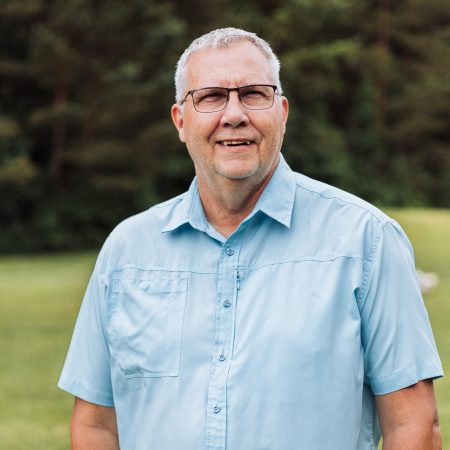
I am currently a Pastor serving in Ontario Canada. Under the International arm of our denomination (Fellowship of Evangelical Baptist Churches of Canada), I serve as the ministry Coordinator for all our projects worldwide. My goal is to take this ministry on full time in the coming months. The ministry is to serve under-resourced pastors with both fundamental Bible training as well as developing a reproducible discipleship model for their particular cultural and contexts. Helping pastors that will never have access to the educational and physical resources we are blessed with in the west, our desire is to leverage the talented pastors and church leaders in Canada, to go to those that express a desire to develop in their ministries and request our assistance. We utilize several curriculum series to best meet the unique needs in each project field we engage with. Our goal is to achieve a level of competency in each leader or pastor that will allow them to flourish in ministry and train other with what they have learned themselves.
2. Why Pastoral Leaders Matter – Why is training pastors a priority in your ministry or work?
If one is to consider what a pastoral ministry in North America would be like, without being able to have any sort of biblical or theological training, we would probably use terms like impossible, hopeless or impractical and harmful. Yet this is where the majority of pastors globally live every day. As a pastor, I could not conceive that the Church in that context could flourish or even survive. This heartbreaking reality is what ignites my fire to do all we as an organization can do to address this staggering need and raise up leaders that can reproduce themselves many times over once our project with them is completed. The goal to get them to a place of independence from us, instead of dependence on us, is critical. A secondary purpose we have embraced in recent years, is to help fill in some of the leadership gaps in topics that traditional theological education has not typically addressed. Topics like dealing with difficult people, organizing a church structure, giving and finance issues, integrity and morality and others. Our heart is for the Church globally and to see it healthy, growing and ready to accomplish all the Great Commission entails.
3. Developing Pastor Trainers – How are you helping raise up new trainers of pastors where you serve?
Our ministry model is one that utilizes Canadian church partners and pastors to work together on specific geographical projects. Our goal is to complete all of our projects with clear second generation groups already on the horizon. Getting the pastor/leader to this point is vital for us to consider a project successfully complete. We focus not just on the transmission of knowledge but also on the transferring of effective means to train others as well. In our opinion this is as critical as the theological content we facilitate learning. Our projects, which generally run from three to five years, always develop with an exit strategy in place so that the effects will multiply over and over in their context once we are gone. By utilizing a variety of pastors in each project, we expose the participants to a broader range of ministry gifts, strategies and expertise. The homework left after each session allows pastors to learn and be challenged even we are not on the ground with them. A target we are looking to incorporate more fully in our training is the set of outcomes, endorsed by Re-Forma. If pastors are competent in these and desire to see other reach these levels of ability the church will thrive much more easily.
4. Better Together – Why does collaboration across pastor-training sectors matter to your work?
We see value in taking the strength of the structures and disciplines that the formal sector requires and combine it with the relational components of the informal sector philosophy. If these can come together along with a pattern of learning that is intrinsic in the non-formal sector it can have great transformational power in the lives of pastors.
After attending the GPro Congress in Panama, I was hopeful for what I had seen as a concerted effort to gather like-minded people and organizations together. We are convinced that cooperation across sectors while not being absolutely critical, can be tremendously effective and helpful in many different situations. I still think we have a long way to go on this.
Another apparent weakness in the non-formal sector is that we are so busy doing our own thing, that we are not even aware of what others are doing that is similar or perhaps even identical to our own ministries. It was astounding to see how many ministries are doing what we do and that was a huge encouragement.
One heartfelt desire I have personally is that we need some sort of collection spot for people doing non-formal training globally as opposed to regionally. The challenges we face in a global context are different than what is reality in Latin America for instance. This remains a burden for me.
5. Join the Work – How can others connect with you or get involved in what you’re doing?
Being a denominational organization brings some limitations for connection directly to the ministry but it is always possible to have points of connect based on a common field, philosophy of training/ministry or a shared passion to see pastor grow healthy to produce healthy churches.
Recognizing our need to consistently improve in serving, I am always up for a conversation on global pastor training and how we can all serve the Church more effectively to complete the Great Commission.
I can be reached at pharbourne@fellowship.ca or on WhatsApp +17056061664